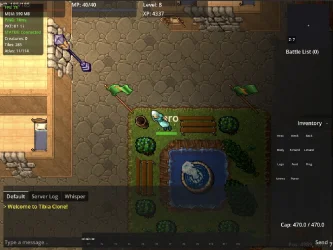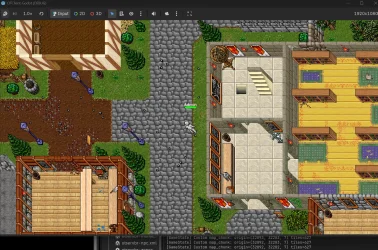

Hey everyone,
I've been working on a Tibia clone built from scratch using a completely different tech stack from the traditional OT approach. Instead of the C++ server + custom client, I'm using:

Would love to hear feedback from the community. Happy to answer any questions about the tech stack choices or the AI-assisted development approach.
I've been working on a Tibia clone built from scratch using a completely different tech stack from the traditional OT approach. Instead of the C++ server + custom client, I'm using:
- Server: Nakama game server with a Go runtime plugin
- Client: Godot 4 (GDScript)
- Data Pipeline: Python scripts converting original Tibia v1100 assets (.spr, .dat, OTBM maps)
What's Implemented
Server-side (Go/Nakama):
- Combat system (melee, distance, magic) with armor/defense calculations
- 10+ condition types (poison, fire, energy, bleed, haste, paralyze, etc.)
- Spell system with per-spell and group cooldowns, vocation/level requirements
- Monster AI with FSM states (idle → chase → attack → flee → return)
- Spawn system with respawn tracking
- Party system with shared XP (distance + level gating)
- PvP with skull system (white/red/black), PZ locks, unjust kill tracking
- Item system: pickup, drop, equipment slots, backpack, item decay, loot generation
- Experience & leveling with vocation-based stat gains
- NPC interactions and shops
- 8-way movement with speed-based walk timing
- Player persistence via Nakama storage (save on disconnect)
- 50+ binary message types
Client-side (Godot 4):
- Full sprite pipeline: extracts 463k sprites from Tibia.spr (RLE), packs into 114 atlas sheets (2048x2048), lazy-loaded on demand
- Thing metadata parsed from Tibia.dat (43k items, 1.6k creatures, 247 effects)
- Outfit color shader (RGBA mask tinting for head/body/legs/feet)
- Y-sorted 2D tile renderer with ground + item passes
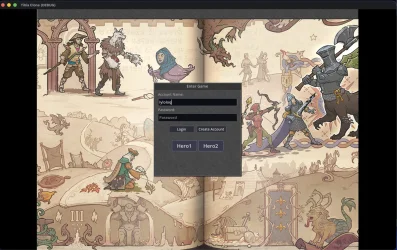
- v1-style login flow (login screen, character list, create account)
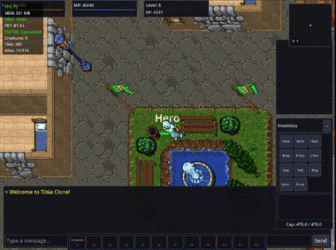
- Inventory, hotbar, battle list, party panel, chat, minimap, NPC dialog, loot container
- Creature sprites with walk animations from original lookTypes
Binary Protocol:
- Custom binary codec replacing JSON for all game messages
- Typed fields: U8, U16, U32, I64, F64, String (U16 length-prefixed), UUID (16 bytes), Position (5 bytes)
- Composite blocks for creatures, items, tiles, spells
OTBM Map Parser (Go):
- Parses real OTBM files (tested with Canary maps)
- Supports tile areas, items, towns, waypoints, house tiles, zone definitions
- Handles node escape sequences and attribute parsing
- Falls back to JSON map if OTBM loading fails
Data Pipeline (Python):
- convert_sprites.py — RLE sprite extraction from v1100 format
- convert_dat.py — Thing metadata with v1000+ attribute remapping
- pack_atlas.py — Atlas generation with JSON index
- Converters for vocations, monsters, items, spells from Canary XML → JSON
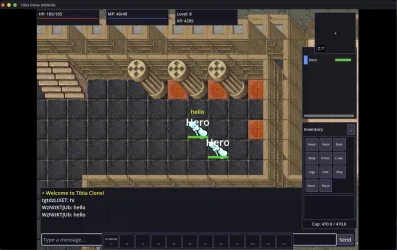
Screenshots
Technical Highlights
- 10 Hz server tick rate with all systems (combat, AI, spawning, conditions, decay) running per tick
- Lazy atlas loading — 114 sheets loaded on-demand, not at startup
- OTBM with graceful fallback — loads real maps, degrades to JSON, generates default 256x256 if both fail
- Tile visibility culling — only 9x7 tiles around the player are transmitted
What's Next
- Pathfinding (A*)
- More OTBM integration (spawns from XML, full house support)
- Sound system
- Container system (bags, depot)
Would love to hear feedback from the community. Happy to answer any questions about the tech stack choices or the AI-assisted development approach.
Attachments
-
 1771477427545.webp97.4 KB · Views: 664 · VirusTotal
Last edited: