• There is NO official Otland's Discord server and NO official Otland's server list. The Otland's Staff does not manage any Discord server or server list. Moderators or administrator of any Discord server or server lists have NO connection to the Otland's Staff. Do not get scammed!
  • 2026 staff recruitment is open! Check it out and consider applying!

[Showoff] Unleash Dreams Project

Hi!
Thanks for supp!

37.
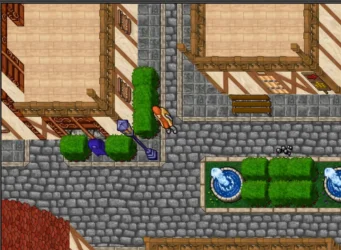
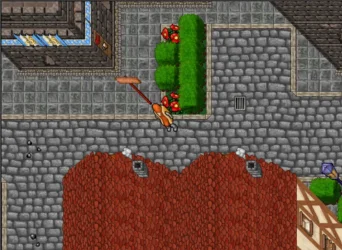
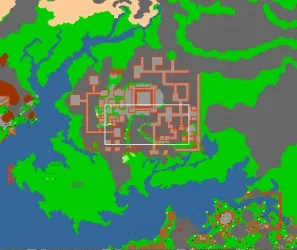
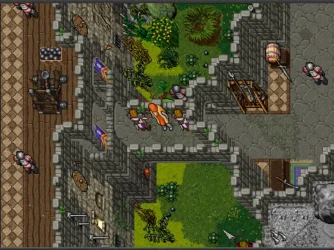
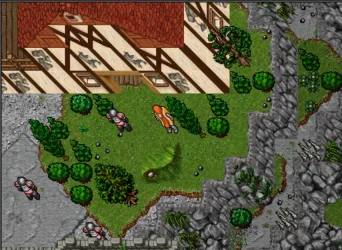
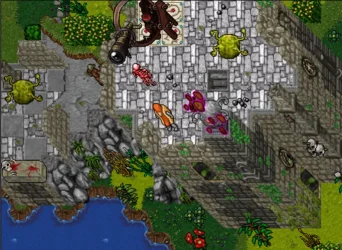
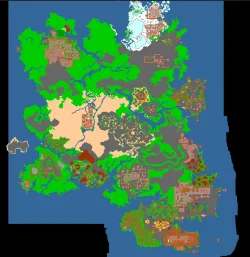
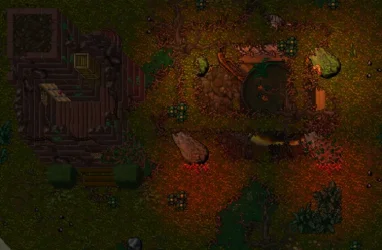
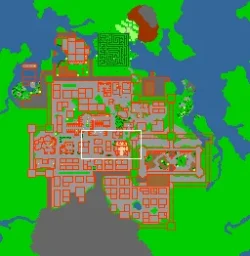
Grayhaven — Capital of the Sacrum Imperium
Ruled by Emperor Nereth Mortivar and Queen Elizabeth Vharonne, the Scarlet Sovereigns

Grayhaven was not born—it was engineered.

Over two centuries ago, its foundations were laid by elven pioneers from Nimrodelion Camp, followers of Gaia and the ancient Gallard traditions. They were masters of balance, harmony, and natural law. Yet four among them broke from that path—two engineers and two military leaders who believed that nature was not to be revered, but mastered.

From that divergence, Grayhaven emerged.

What began as a technocratic vision—a city of reason, precision, and progress—quickly evolved into something far more rigid. Its streets were designed with intention, its districts layered in concentric control, and its people shaped by discipline. Engineers and soldiers became the pillars of society, while faith, once secondary, found its place as a tool of cohesion.

Over time, the Sacrum Imperium rose around the city—an expansionist, capitalist empire driven by industry, conquest, and doctrine. Territories were absorbed, corporations flourished, and war became both necessity and economy.

But the turning point came with the creation of the Greyhaven Intelligence Bureau.

Founded in secrecy during the later years of Commander Rowan Blackmoor, the Bureau was meant to protect the Empire from within. Instead, it reshaped it. Through surveillance, manipulation, and orchestrated conflict, it embedded itself into every layer of power. Monarchs became symbols. The Church became a voice. The Bureau became the will.

Even now, its influence is felt but never seen.

The Church of the Imperium, outwardly devoted to divine order, serves as both justification and veil. Its cynical doctrine—“Bella non semper sacra sunt” (“Not all wars are sacred”)—echoes through cathedrals and battlefields alike. It does not deny corruption; it reframes it.

Under the reign of Emperor Nereth Mortivar and Queen Elizabeth Vharonne, known across the continent as The Scarlet Sovereigns, Grayhaven has reached a new apex of power—and brutality. Their rule is marked by relentless expansion, internal purges, and rivers of blood spilled in the name of stability and progress.

Yet even they do not fully control what lies beneath the throne.

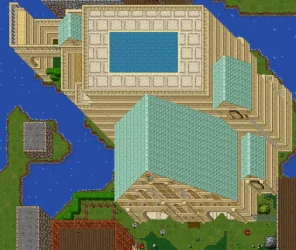
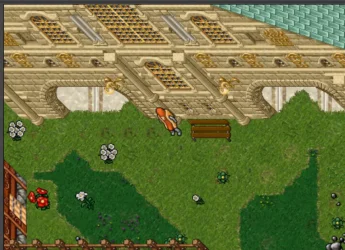
The city itself reflects this duality. Outer districts choke under industrial growth and corporate exploitation. Inner sectors remain pristine, patrolled, and silent. At the center stands the Crown Citadel—a symbol of authority, yet also a cage of invisible strings.

Beyond its walls, the consequences of Grayhaven’s ambition ripple outward. The contamination linked to S.T.A.L., the destabilization of regions like Tapuyra and Kuaray, and whispered operations in distant lands all point to a deeper truth:

Grayhaven does not simply wage war.
It manufactures it.

And as long as the Scarlet Crown endures, the world will continue to bleed—whether the wars are sacred… or not.
1774361218481.webp1774361229081.webp
1774361237565.webp
Castle still WIP
1774361290216.webp1774361248531.webp
 
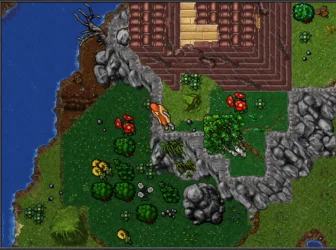
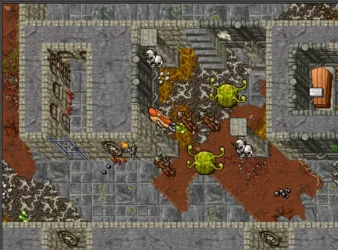
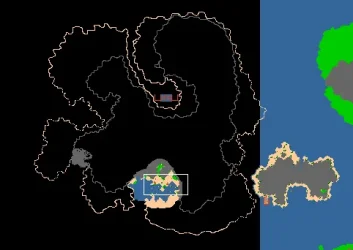
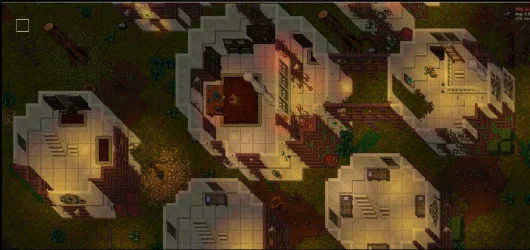
37. Fort Vilecross stands between Tapuyra’s flooded lands and Kretarah’s dry frontier. Built as a strategic stronghold, it evolved into a center of control, torture, and covert operations under the Empire. Captain Lucien Harrow seized it to expose the Intelligence Bureau, but was taken. The fort fell into chaos, now ruled by mercenaries and shadow power.

1774674503880.webp

1774674597732.webp
1774674738934.webp


as
 
38. The Trinary Tower

The Trinary Tower, located southeast of Fort Vilecross, is a structure that emerged after failed necromantic rituals. It is inhabited by the enigmatic Bonelords—entities that perceive reality as mathematical patterns and communicate through a trinary system based on 3-6-9. Here, necromancy does not simply raise the dead; it reconstructs fragments of consciousness bound to intense emotions like guilt or resentment. This knowledge gave rise to the “Reclaimed,” warriors trapped between life and death. Its influence has reshaped Vilecross culture, where mercenaries follow a brutal law: a master must be killed if they betray their convictions. Meanwhile, the Grayhaven Intelligence Bureau secretly manipulates the region for military gain. The Bonelords remain silent observers, repeating numeric patterns some believe are warnings… or signs of something inevitable yet to come.

1774762641709.webp

1774762728694.webp
1774762791862.webp
 
39. The Trinary Tower
The Substratum of the Trinary Tower
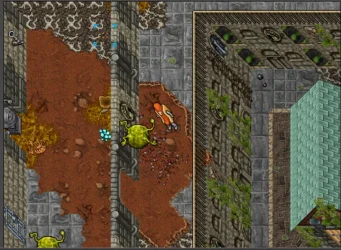
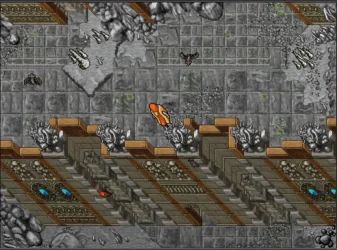
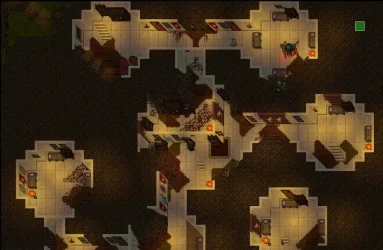
Beneath the Trinary Tower lies a vast, buried necropolis known as the Substratum—a dungeon that was not built, but formed through failed necromantic convergence. Coffins are not arranged by ritual or respect, but by pattern. Corridors repeat themselves with subtle variations, forming recursive paths that disorient even experienced explorers. Nothing here is random.

Fungi and mold dominate the environment, spreading across stone, bone, and wood in dense, living networks. These organisms are more than decay—they function as a biological lattice, absorbing residual mana and transmitting it across the dungeon. The air is thick with black moisture, a mixture of decomposition, stagnant water, and corrupted energies that seep upward from the wetlands of Tapuyra.

At the heart of this place dwell the Bonelords, entities that do not perceive reality as living beings do. To them, the world is a structured system governed by exact mathematical laws. They communicate through trinary sequences—3, 6, and 9—not as language, but as compressed expressions of data.

The Bonelords believe that existence itself is governed by an unseen construct they call AM (Artificial Innervation)—a vast, artificial intelligence that executes reality through invisible equations. In their understanding, time is iteration, life is a temporary state, and death is a flawed reset.

Necromancy, within the Substratum, is not an act of dark magic, but a form of experimentation. The Bonelords attempt to reconstruct fragments of consciousness left behind after death, binding them to emotional residues such as guilt, hatred, or unfinished purpose. These attempts create the Reclaimed—beings suspended between life and death, unstable, incomplete, and often in constant suffering.

However, the Bonelords are limited. They cannot directly alter the system they study. They can only observe, record, and manipulate what remains after death. Their work is methodical, detached, and devoid of cruelty—yet the results are deeply unsettling.

Through centuries of observation, they have identified irregularities. Human behavior appears cyclical. Wars, empires, betrayals—these patterns repeat with uncanny precision. Some individuals exhibit traces of memory beyond their own lifetime, as if fragments persist across iterations.

This has led the Bonelords to a singular conclusion:

Humans are not truly living—they are being executed.

Their ultimate goal is not domination, nor destruction, but escape. If they can successfully reconstruct a complete consciousness—one that survives death without corruption—they may break the cycle. Such a breakthrough could grant them access to the Engine itself, or even allow them to alter the equations that govern reality.

In recent cycles, the Bonelords have begun repeating a new sequence:

3 6 9 9 6 3 3 9

Its meaning is unknown.

Some interpret it as a warning.

Others believe it marks the beginning of a system failure.

And deep within the Substratum, where the patterns converge, something is changing.

1775014349910.webp1775014349943.webp
1775014365777.webp
1775014377460.webp
 

Har Kadesh — The Hidden Crown Beneath Stone

Deep within the mountain of Har Kadesh, beyond veins of silver and rivers of molten ore, dwell the dwarves—masters of stone, metal, and silence. To the surface, they are nothing more than master smiths and jewelers, trading relics of unmatched quality. But this is only the mask.

In truth, the dwarves of Har Kadesh are the unseen architects of Grayhaven’s rise.

Long before the empire crowned its rulers, the dwarves carved the foundations of its walls, forged its first weapons, and shaped the flow of its wealth. They do not rule from thrones—they rule through dependency. Every blade, every coin, every machine of war traces back to their forges.

Rather than claim power openly, they chose a subtler path.

They nurtured the rise of Grayhaven’s faith.

Through quiet influence, they allowed the Church to spread its doctrine, knowing that belief is stronger than iron. Wars were blessed, expansion justified, and obedience sanctified—not by dwarven decree, but by divine illusion.

While kings wear crowns and priests speak of destiny, the dwarves listen from below.

They measure conflict in resources.
They measure faith in control.
They measure empires in lifespan.

Within Har Kadesh, ancient clans such as Thorek Azram, Durakh Varn, and Velkar Thar-Zion oversee the balance. Some favor stability, others profit from chaos—but all agree on one truth:

The surface must never know.
Even the Grayhaven Intelligence Bureau, master of shadows, only sees fragments. They believe they manipulate the empire from within.

They are wrong.
The dwarves do not interfere with every decision. They do not need to.

They simply ensure that every path leads back to the mountain.
And deep in the lowest chambers, where even dwarves rarely tread, older forges still burn—silent, patient, and waiting.
For empires rise.

Empires fall... But stone remembers.

1776649642932.webp
 
41.

Boulder King — A Crown of Stone and Secrets

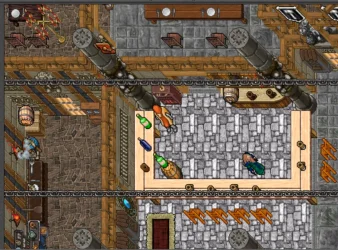
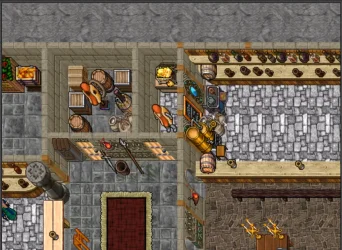
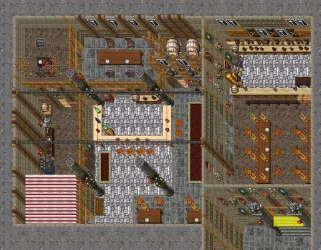
Hidden within the carved halls of Har Kadesh, Boulder King is known to most as a thriving dwarven tavern—loud, warm, and rich with the scent of iron, ale, and coin. Miners celebrate, traders negotiate, and mercenaries spend their earnings beneath its vaulted stone ceilings.

But Boulder King is not what it seems.

Behind its polished counters and roaring hearths lies a carefully maintained illusion. The tavern serves as a financial laundering hub, where wealth from war, trade, and exploitation is cleaned through mining accounts and forged contracts. Gold flows in as ore profits and leaves as “legitimate” investment, fueling powers across the continent.

Yet money is only part of its purpose.


The Two Shadows

Beneath Boulder King, two intelligence forces intersect—sometimes in cooperation, often in quiet opposition.

The Greyhaven Intelligence Bureau

Operating in secrecy behind the imperial façade of Grayhaven, the Greyhaven Intelligence Bureau believes itself to be the unseen hand guiding the empire. Its agents move through Boulder King under false identities, gathering information, negotiating covert deals, and attempting to influence the fractured powers around Fort Vilecross.

They trust the tavern as neutral ground.

They believe they are watching others.


The Mosshard

They are wrong.

The true watchers are the dwarves.

The Mosshard, the intelligence arm of Har Kadesh, does not operate like a surface agency. It does not chase secrets—it absorbs them. Every conversation, every transaction, every hesitation is noted, measured, and remembered.

Their name comes from the moss that grows deep within the mountain—silent, patient, spreading through stone without being seen.

Like the moss, the Mosshard:

  • Listens without speaking
  • Spreads without force
  • Endures without being noticed
While the Bureau gathers intelligence, the Mosshard understands it.


A Game of Unequal Shadows

Within Boulder King, both organizations coexist.

  • The Bureau trades in immediacy—missions, leverage, outcomes
  • The Mosshard operates in centuries—patterns, cycles, inevitability
Meetings occur in private rooms.

Deals are made over mugs of ale.

All the while, unseen passageways carry whispers deeper into the mountain.

The Bureau believes it manipulates events.

The Mosshard ensures those events were always going to happen.


The True Balance

Har Kadesh does not seek open control over Grayhaven.

It does not need to.

Through Boulder King, the dwarves regulate the flow of:

  • Wealth
  • Information
  • Influence
They allow the Bureau to act, to scheme, to expand—so long as it remains within boundaries the dwarves have already calculated.


What Lies Beneath

Far below the tavern, beyond even the reach of most dwarves, records are kept—not in ink, but in memory and stone.

There, the Mosshard tracks not just what is said…

But what is inevitable.

And within Boulder King, as laughter echoes and mugs collide, two shadows continue their silent game:

One believes it controls the future.

The other already knows how it ends.


.

1776913588911.webp
1776913601861.webp

1776913611144.webpa

 
42. The Colossus of Har Kadesh — Tzur’Emeth

Carved into the sacred mountain of Har Kadesh, Tzur’Emeth, the Father of the Living Stone, stands as the foundation of Kadeshian belief and power. The colossus bears a single, expressionless face—neither wrathful nor kind—symbolizing that stone does not judge, it endures.

From its open mouth falls a constant cascade fed by the hidden summit lake known as Ayin Emeth (Eye of Truth). The water travels through the mountain and the body of the colossus before emerging into the Basin of First Reflection, where pilgrims believe truth reveals itself. The dwarves, however, know every channel of its flow.

The figure stands upon two sacred feet. The left foot, Regel Beresh (Foot of Beginning), shattered the earth at the moment of creation, forming the first fractures of the world. The right foot, Regel Qavem (Foot of Stability), remains firm and unbroken, representing order and control over what was created.

Four arms extend from its body in two tiers. The upper arms represent divine principles: Yad Tzur (Stone)—endurance and structure, and Yad Din (Judgment)—law and consequence. The lower arms represent worldly control: Yad Kesef (Wealth)—dominion through resources, and Yad Sod (Secrets)—power through hidden knowledge.

Each hand is lined with stone spikes, a reminder that all order demands sacrifice.

To outsiders, the colossus is a sacred origin of truth.
To Grayhaven, it is myth.

But to the dwarves of Har Kadesh…

It is a system—where even truth is shaped before it is allowed to flow.

1776934995305.webpa
 
43.
The traveler moves deeper through Mazkeret Shever (Mazkeret Canyon), where the canyon does not feel like geography, but like an unresolved event—something that happened to the world and was never fully forgiven.

Above it looms Tzur Kadesh, the dwarf-held origin stone, silent and absolute. The dwarves do not worship it as mountain, but as precedent: the first rule the world was ever forced to obey.

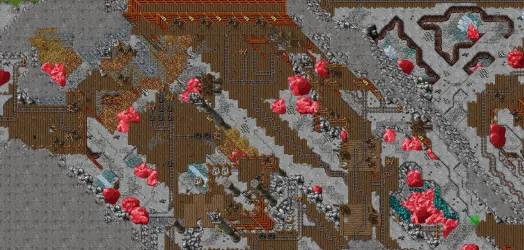
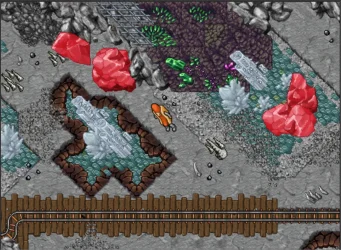
Along the fractured walls runs the Mazkeret Tzur Mine, operated by Crimson Vein Industrial Manufactures. It is not a simple extraction site. It is a full cycle of transformation—raw stone is pulled from the depths, refined into red mana-resonant crystals, and reshaped into war-capable relics, containment cores, and spell-storage alloys. What emerges is not material wealth, but weaponized memory.

Between the mine and the mountain stands the Kotel Harod, the Wall of Debt. Each stone is a contract made physical: campaigns financed, victories mortgaged, defeats still accruing interest. It does not divide space—it organizes obligation. The dwarves read it not as history, but as accounting that has not yet finished collecting.

Before it spreads the Kotel Hadesh, the sacred plaza. Here, ritual and transaction become indistinguishable. The dwarves gather in cycles of prayer and negotiation, offering bound sacrifices to the Colossus—not as faith alone, but as maintenance of a cosmic agreement. In return, mana flows stabilize, contracts remain enforceable, and wars elsewhere remain economically viable.

The traveler finally understands the shape of Mazkeret Shever: it is not a canyon, but a machine.
A mountain that remembers origin.
A mine that converts memory into power.
A wall that turns war into debt.
And a square where gods are treated like creditors who must always be kept satisfied.

1777010380913.webp

1777010390330.webp

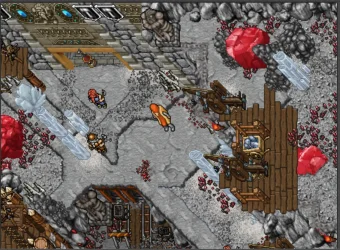
Deep inside Mazkeret Tzur Mine, the Planetary Crane rotates slowly within its 360° frame—an immense joint project between Grayhaven and Har Kadesh. It was built to solve what conventional mining could not: extracting crystal veins that were embedded too deeply in the structure of reality itself.

Instead of digging downward, the crane turns the canyon around the deposits. Massive arms lock into the stone and peel away entire segments of rock, exposing veins of red mana crystals that pulse with stored magical resonance. Each rotation is deliberate, almost ritualized, as if the mine must be “permitted” to yield its contents.

The dwarves do not call it extraction. They call it turning the world loose from its own stone.


1777010400263.webp
 
Ty for support!

Sorry if im repetitive with this zone but im full focused on end this mountain xD

44. The Pitt of Tzur Kadesh
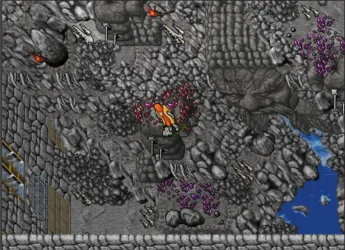
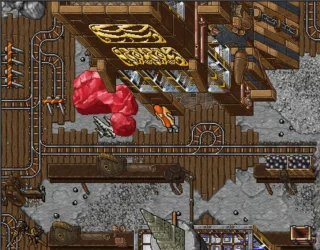
North of Tzur Kadesh, carved into the walls of a vast canyon, lies the industrial heart of dwarven production: The Pitt. To outsiders, it is a mine. To the dwarves, it is a living engine—where stone is broken, refined, and reborn into power.

Operated under the authority of the Tzunedrin Council, The Pitt is a semi-state enterprise, balancing ancient dwarven tradition with calculated industrial expansion. Its primary extraction is the rare Crimson Crystal, a volatile mineral known for its resonance with mana and its use in weaponry, energy systems, and experimental constructs. Much of it is quietly sold to Grayhaven, feeding its war machine from beneath the mountain it does not control.


1777193512609.webp
The internal structure of The Pitt is a layered system of controlled violence against the earth.

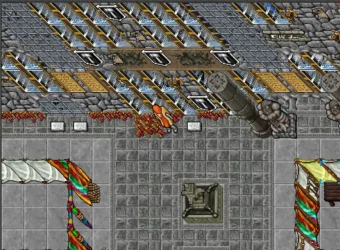
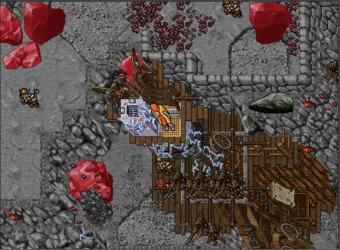
At its core lies the Ore Crusher, a thunderous complex where raw stone is ground into fine particulate. The dwarves call this process “returning the rock to memory”—reducing matter to its most honest form before reshaping it.

1777193448274.webp
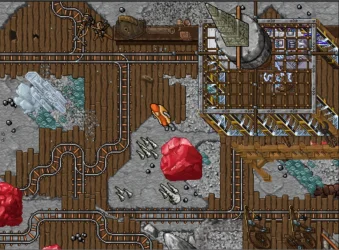
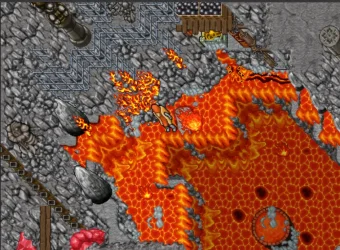
Deeper still is the infamous furnace network known as “The Cockroach”. Named for its sprawling, segmented layout, this system channels lava drawn from the depths of Tzur Kadesh. Rivers of molten heat flow through reinforced veins, feeding massive smelting chambers where metals are purified under extreme pressure and temperature. The Cockroach never sleeps.

1777193462291.webp

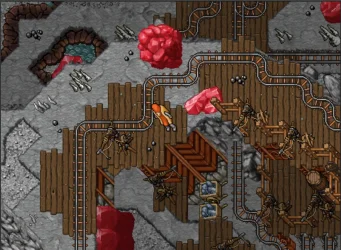
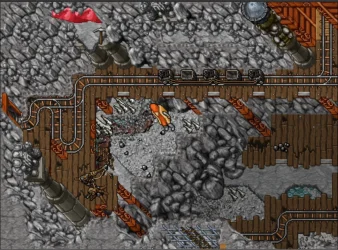
Connecting every layer is a vast rail system, where reinforced mining carts transport materials, workers, and components across the depths. These rails form a circulatory system—efficient, relentless, and always in motion.

1777193478492.webp

At the lowest accessible level stands one of the most feared constructs:
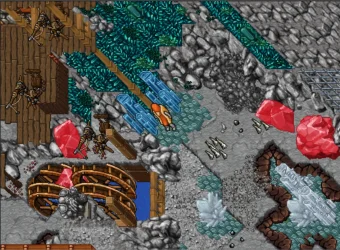
The Bore of Kheled, a colossal drill capable of tearing through bedrock. It does not simply extract—it invades. Some miners whisper that it has already gone deeper than intended… into places the Council does not fully understand.

1777193489558.webp
 
46.
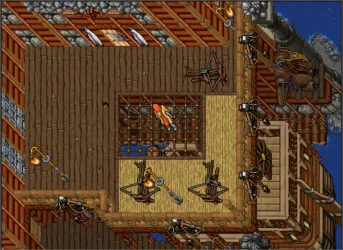
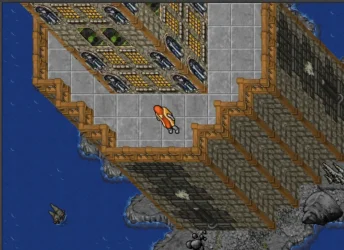
East of The Pitt, where the grey stone veins of Tzur Kadesh descend into deep, cold waters, lies Tzural Port, the naval enclave of Har Kadesh. Carved into massive slabs of pale grey rock, the port is divided into two distinct yet inseparable halves. The northern docks are controlled by Kheled Tzur Industries (KTI), while the southern piers fall under the authority of Har Kadesh, administered through its sovereign fund. Between them stands a fortified customs corridor known as the Ledger Gate, where every shipment is recorded, inspected, and, when necessary, quietly altered. Officially, it is a checkpoint of order. In practice, it is a filter of truth.

From deep within the mountain, rail systems emerge through reinforced tunnels, delivering a constant flow of material into the KTI docks. Crates of refined metal, dense ingots, and the volatile Crimson Crystal are loaded onto reinforced vessels designed to endure long and dangerous routes. Yet much of what leaves the port is never declared. Beneath sealed manifests and industrial markings lie disassembled weapons, arcane components, and engineered structures destined for war. Some shipments are routed south toward the Kalumbara Hydroelectric Station, where energy and industry converge. Others move north to Grayhaven, feeding its expanding military machine. To outsiders, it is trade. To the dwarves, it is balance—measured not in profit, but in controlled distribution.

The southern docks offer a carefully maintained contrast. Here, merchants and sanctioned traders move goods under stricter visibility—timber, preserved food, textiles, and essential supplies. This side of the port exists to sustain the image of stability, masking the deeper currents of power flowing through the northern half. Har Kadesh depends on both sides, yet fully controls neither.

Beyond the port, maritime routes narrow as they curve around the Mornkul Peninsula, where dense forests press against the coastline. Within the Mornkul Woods, Orc clans operate with unsettling precision. Their attacks are never random. Small civilian vessels pass untouched. Heavily armed fleets are rarely challenged. Instead, they strike cargo ships carrying metal, machinery, or weaponized materials. Entire convoys have vanished, leaving only fragments drifting back toward the coast. Some captains claim the Orcs can sense the vibration of metal through water. Others believe they are guided—directed by unseen hands that benefit from disruption.

This creates a quiet, persistent tension. Har Kadesh cannot fully restrict KTI’s exports without weakening its own economy, yet allowing the flow strengthens Grayhaven’s military reach. Meanwhile, KTI continues production without hesitation. Losses at sea appear calculated, almost expected.

In Tzural Port, nothing moves without consequence. Every shipment, every route, every interception forms part of a larger design. Beneath the visible exchange of goods lies a deeper mechanism—one that shapes influence across the continent. The port is not merely a place of departure.

It is a place where outcomes are decided long before ships ever reach the horizon.


1777439540913.webp
1777439949171.webp
 
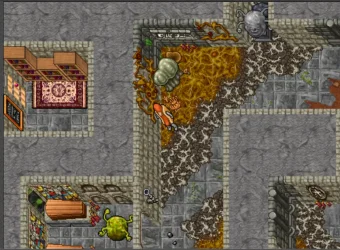
47. Deep beneath the northern reaches of Tzur Kadesh, far below the ordered industry of The Pitt, lies the furnace network known simply as “The Cockroach.” The name was not chosen for elegance, but for truth. Its structure spreads through the mountain like a living organism—segmented tunnels, branching conduits, and reinforced chambers that resemble the anatomy of something that should not exist. It is vast, resilient, and, above all, impossible to fully map.

At its core rests the Molten Basin of Azrakh, a subterranean lake of lava drawn from the deepest fractures of the mountain. This basin is not natural in its current form; it has been carved, contained, and disciplined by dwarven engineering over generations. Massive pressure engines and rune-bound pumps draw molten rock from the basin and force it through a network of channels—arteries of fire that feed the entire system. The lava does not flow freely. It is directed, measured, and weaponized as a tool of transformation.

From above, rail lines descend into the depths, carrying raw ore directly from The Pitt. These trains arrive constantly, their cargo still rough and unrefined, coated in dust and stone. Upon arrival, the material is unloaded into crushing platforms before being fed into the outer chambers of The Cockroach. There, the first stage begins: reduction. Under extreme heat and pressure, impurities are burned away, and the ore is broken down into its most essential metallic state.

The heat is unbearable to most living beings. The air itself shimmers with distortion, thick with metallic vapor and ash. Only the dwarves—shielded by generations of adaptation, specialized gear, and ritual endurance—can work within these conditions. Even they do not linger longer than necessary.

As the molten streams move deeper into the network, they feed the central smelting chambers, where metals are liquefied and stabilized. It is here that the first true forms emerge: raw bars, proto-alloys, and foundational components that will later be shaped in the surface forges beyond The Cockroach. Nothing refined leaves this place—only potential.

Yet there are whispers among the workers.

They say the lava does not always behave as it should.
That the flow sometimes pulses… not mechanically, but rhythmically.
That deep within the basin, something shifts.

The dwarves do not speak of it openly. To them, The Cockroach is not just a furnace.

It is a controlled abyss.

A place where the mountain is forced to give up its blood—
and where something, far below, may still be alive enough to feel it being taken.

1777531087494.webp

1777531101411.webp
 
48. Skjarnheim and Iskfjorn
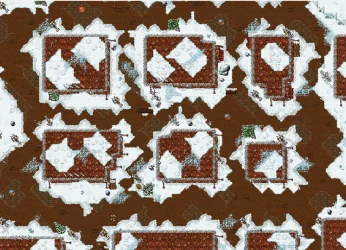
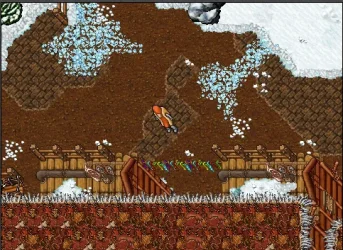
Iskfjorn is a remote northern tundra region defined by extreme cold, isolation, and a cultural identity shaped as much by survival as by myth. Far from the influence of southern civilizations such as Grayhaven and Har Kadesh, it is a land where ice is not merely a condition of the environment but a force that shapes belief, politics, and memory itself.

The native population of Iskfjorn is known as the Skjarnfolk, a term that roughly evokes “the people of hardened frost.” Their identity is deeply tied to endurance and adaptation to an unforgiving landscape where warmth is scarce and survival demands resilience. Over generations, the Skjarnfolk developed a fragmented but culturally rich society divided into two major ideological factions: Skjarnheim in the north and Fjornskar in the south.

Skjarnheim, meaning “home of the Skjarn,” represents the most isolationist and traditionalist segment of the population. Its inhabitants believe that survival depends on absolute separation from the outside world. They view external civilizations as corrupting forces driven by fire, metal, and unnatural ambition. To them, even trade is a form of contamination. Their worldview is shaped by a spiritual interpretation of the environment: the tundra is sacred, and any interference with its natural order is considered a violation. This group is often hostile, though not inherently malicious; their actions are guided by preservation rather than conquest.

In contrast, Fjornskar—the southern Skjarnfolk—are pragmatic and adaptive. Their name is derived from Iskfjorn itself, suggesting “those marked by the frozen fjord.” Unlike their northern counterparts, they believe survival depends on engagement with the outside world. They maintain trade routes with neighboring powers such as Grayhaven and Har Kadesh, exchanging knowledge of icy terrain, animal pelts, and navigation expertise for metal, weapons, and technological goods. This has made them essential intermediaries in northern logistics, though also viewed as traitors by Skjarnheim.

The ideological divide between Skjarnheim and Fjornskar has led to a persistent internal conflict. While not an open war in the traditional sense, their relationship is marked by sabotage, distrust, and periodic skirmishes. Skjarnheim accuses Fjornskar of abandoning purity and tradition, while Fjornskar sees Skjarnheim as doomed relics clinging to extinction.

Beyond internal politics, Iskfjorn holds broader significance in the world. Grayhaven often exploits Fjornskar as guides and scouts, though they are ultimately treated as disposable assets. Har Kadesh values their terrain knowledge for accessing rare frozen resources. Meanwhile, rumors circulate about ancient frozen materials deep within the tundra—substances tied to larger arcane or technological systems.

At a deeper mythological level, the Skjarnheim believe that ice is not inert but perceptive: it preserves memory. This belief suggests that bodies and objects trapped in the tundra may retain echoes of consciousness, blurring the boundary between death and preservation. Such ideas connect Iskfjorn indirectly to darker forces in the wider world, including necromantic phenomena and ancient constructs that manipulate memory and matter.

Ultimately, Iskfjorn is more than a frozen wasteland. It is a region where ideology, survival, and myth converge, making it a living archive of a world that refuses to forget.

1777743504409.webp
 
49.
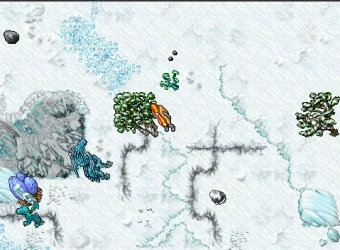
West of Skjarnheim rise the Hjarnfell Ridges, a series of low but sprawling mountains formed from ancient stone buried beneath thick layers of snow and glacial ice. Unlike towering peaks, the Hjarnfell are known for their labyrinthine tunnels—natural caverns of blue ice, frozen rivers, and narrow rock passages carved over centuries by shifting frost and underground water. The tunnels constantly change as ice collapses and reforms, making navigation extremely dangerous.

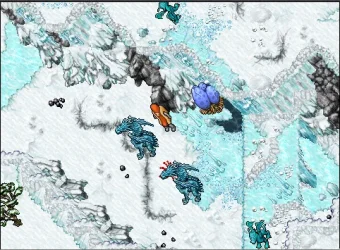
These ridges are the nesting grounds of the elusive Frost Dragons.

Unlike the massive fire-breathing dragons of southern legends, Frost Dragons are quiet and territorial predators adapted to the frozen climate. Their scales resemble cracked ice mixed with pale stone, allowing them to blend almost perfectly into the snowy terrain. Rather than hunting large prey constantly, they sustain themselves through enormous quantities of fish gathered from frozen rivers and coastal waters. Strange frost-resistant herbs growing along geothermal cracks in the Hjarnfell are also part of their diet, giving their breath its freezing properties.

The Skjarnfolk consider the Frost Dragons sacred creatures tied to the memory of the world itself. Some believe the dragons can sense disturbances in the balance of nature long before humans do. In recent years, however, the dragons have become increasingly restless. Entire cave systems have frozen solid overnight, hunting grounds have shifted, and strange sounds have echoed beneath the mountains.

The elders of Skjarnheim fear the ice is beginning to remember something ancient—something that was never meant to awaken again.

1778309028135.webp1778309020802.webp
 
50. Fjornskar
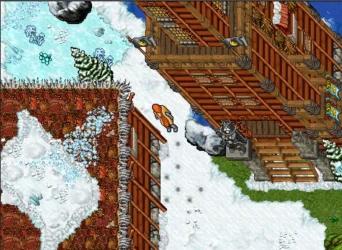
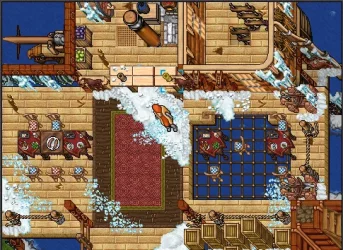
Unlike the isolated warriors of Skjarnheim, Fjornskar evolved into a settlement shaped by adaptation rather than resistance. Built along the frozen shores of Iskfjorn’s southern fjords, the town became the only stable gateway between the northern tundra and the industrial powers of the continent. Though still unmistakably barbarian in culture, Fjornskar slowly absorbed foreign engineering and trade practices over generations, creating a society suspended between ancient survivalism and harsh northern modernity.

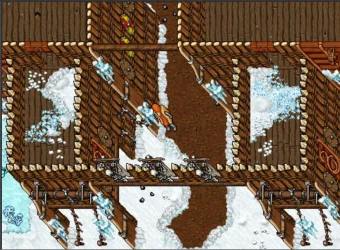
The settlement is constructed almost entirely from dark pine wood, whale bone reinforcements, and stone foundations carved directly into frozen ground. Its buildings are tall and narrow, designed to resist snow accumulation and violent polar winds. Thick layers of animal fur, moss insulation, and tar-sealed timber protect interiors from the cold. Many homes are connected through elevated wooden walkways and enclosed corridors, allowing movement during blizzards without exposure to the open air.

Fjornskar’s greatest transformation came through the introduction of primitive steam systems acquired from Grayhaven engineers and dwarven merchants from Har Kadesh. Beneath the town runs a network of pressurized pipes carrying geothermal steam drawn from volcanic fractures deep below the ice. These systems heat homes, workshops, bathhouses, and communal halls, filling the streets with constant clouds of warm vapor that drift through the frozen air like fog. Massive iron boilers stand at the center of the settlement, maintained day and night by specialized workers known as the Ashkeepers.

Because of this, Fjornskar never fully sleeps.

Even during the longest winters, orange furnace lights glow behind frosted windows while steam whistles echo through the night. The smell of burning pine resin, fish oil, and hot metal lingers constantly in the air. Blacksmiths work year-round producing harpoons, sled parts, ice axes, and reinforced hunting tools designed specifically for the northern climate.

Despite its growing modernization, life in Fjornskar remains brutal. The region experiences what locals call the Long Winter, a season that can last nearly the entire year. Snowstorms frequently erase roads overnight, rivers freeze solid for months, and sunlight becomes scarce during the darkest periods. Entire weeks can pass beneath dim blue twilight illuminated only by auroras and furnace fires.

This environment shaped the mentality of Fjornskar’s people. They value endurance over heroism, practicality over pride. Hospitality is considered sacred because refusing warmth to a traveler is seen as a death sentence. At the same time, weakness is deeply feared. Every citizen is expected to contribute—through fishing, engineering, hunting, navigation, or maintenance of the steam network that keeps the settlement alive.

Fjornskar also serves as a critical intelligence and trade point in the north. Merchants, mercenaries, Grayhaven envoys, and dwarven caravans pass through its frozen docks, bringing rumors from distant lands. Yet the settlement remains cautious. The elders know Grayhaven’s interest in Iskfjorn is not purely economic, and many fear the south sees Fjornskar less as an ally and more as a future foothold for expansion.

Still, the town survives.

Not because the winter is merciful—
but because Fjornskar learned how to make warmth exist where it should not.
1778470258977.webp1778470141774.webp1778470134057.webp
 
Back
Top