You are using an out of date browser. It may not display this or other websites correctly.
You should upgrade or use an alternative browser.
You should upgrade or use an alternative browser.
[Showoff] Unleash Dreams Project
- Thread starter Kaorus
- Start date

OP
OP

Kaorus
Unleash Dreams Staff
- Joined
- May 18, 2008
- Messages
- 1,191
- Solutions
- 1
- Reaction score
- 173
53.
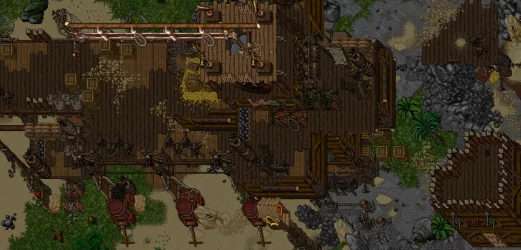
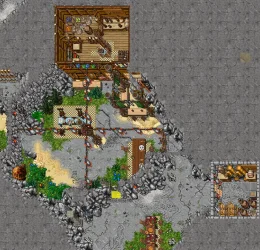
The port is famous for its colossal central crane, nicknamed "The Harry Krane" after the legendary pirate dynasty that helped transform the island into a maritime powerhouse. Visible from miles away, the crane dominates the skyline and has become the symbol of Emberwake's wealth and influence.
The harbor is governed by Pirate Harris III, descendant of Harris Goldtooth, the corsair who founded the first pirate settlement on the island generations ago. Through trade, privateering, and careful diplomacy, the Harris family accumulated a fortune that made them one of the most powerful merchant dynasties on the continent.
Because the geography of the world makes long-distance navigation difficult, much of the maritime traffic passing between nations is forced to stop at Emberwake. Northern routes near Iskfjorn are threatened by icebergs and storms, while other coastal passages are dangerous and unpredictable. As a result, merchants, adventurers, smugglers, and spies all pass through the harbor.
Officially, Emberwake handles legal commerce, fishing fleets, and international trade. Unofficially, it is believed that most of the world's black-market goods pass through its warehouses and hidden docks. Grayhaven is fully aware of these activities and has historically tolerated them, recognizing the strategic value of controlling trade rather than eliminating it.
Today, Emberwake Harbor remains a neutral meeting ground where pirates, merchants, intelligence agents, and nobles conduct business beneath the shadow of the Harry Krane, the iron giant that never stops moving.
Emberwake Harbor
At the northern edge of Scarlume, known to Grayhaven as Emberwake Isle, lies Emberwake Harbor, one of the busiest and most influential ports in the world. Built into a series of rocky cliffs and natural coves, the harbor serves as a gateway between Grayhaven, Tapuyra, Har Kadesh, and the distant northern seas.The port is famous for its colossal central crane, nicknamed "The Harry Krane" after the legendary pirate dynasty that helped transform the island into a maritime powerhouse. Visible from miles away, the crane dominates the skyline and has become the symbol of Emberwake's wealth and influence.
The harbor is governed by Pirate Harris III, descendant of Harris Goldtooth, the corsair who founded the first pirate settlement on the island generations ago. Through trade, privateering, and careful diplomacy, the Harris family accumulated a fortune that made them one of the most powerful merchant dynasties on the continent.
Because the geography of the world makes long-distance navigation difficult, much of the maritime traffic passing between nations is forced to stop at Emberwake. Northern routes near Iskfjorn are threatened by icebergs and storms, while other coastal passages are dangerous and unpredictable. As a result, merchants, adventurers, smugglers, and spies all pass through the harbor.
Officially, Emberwake handles legal commerce, fishing fleets, and international trade. Unofficially, it is believed that most of the world's black-market goods pass through its warehouses and hidden docks. Grayhaven is fully aware of these activities and has historically tolerated them, recognizing the strategic value of controlling trade rather than eliminating it.
Today, Emberwake Harbor remains a neutral meeting ground where pirates, merchants, intelligence agents, and nobles conduct business beneath the shadow of the Harry Krane, the iron giant that never stops moving.
OP
OP
Kaorus
Unleash Dreams Staff
- Joined
- May 18, 2008
- Messages
- 1,191
- Solutions
- 1
- Reaction score
- 173
55.
Northeast of Scarlume lies The Gallows Tide, a desolate shoreline where the sea never seems to obey the same rules twice. Extreme tidal shifts carve a broad channel across the beach, exposing what appears to be a dry riverbed before the ocean suddenly returns. Countless vessels have become stranded after high tides lifted them ashore, only to abandon them on shifting sands as the waters receded. Many of those wrecks still rest where they were claimed, their broken hulls serving as grim monuments to the island's unforgiving coast.
The cliffs overlooking the beach are crowned by Morgrave Watch, a stone tower commanded by Admiral Silas Morgrave. From its battlements, every ship approaching Emberwake can be seen long before it reaches the harbor. Prisoners, captured spies, failed smugglers, and traitors are often hanged from wooden gallows erected along the shoreline, where the changing tides leave their bodies suspended above the sea or half-buried in the sand. The display serves as a warning to all who mistake mercy for weakness.
Morgrave rules the area with a single principle: the highest bidder writes the law. Pirates, merchants, intelligence agents, and private armies alike may purchase justice, protection, or vengeance, provided the price is high enough. His authority is tolerated by Pirate Harris III because fear keeps the harbor profitable, while Grayhaven quietly benefits from a place where enemies can disappear without implicating the Crown.
Despite its brutal reputation, The Gallows Tide has become an essential piece of Emberwake's political balance. Every captain entering the island sees the gallows before the marketplace, a reminder that in Scarlume loyalty is temporary, contracts are sacred only while paid for, and even the tide itself can betray those who trust it.
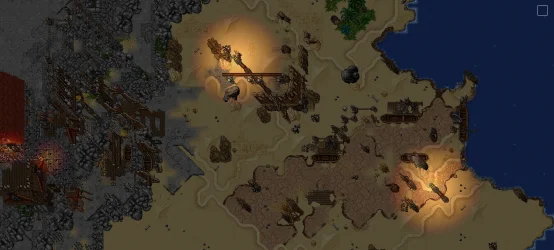
Northeast of Scarlume lies The Gallows Tide, a desolate shoreline where the sea never seems to obey the same rules twice. Extreme tidal shifts carve a broad channel across the beach, exposing what appears to be a dry riverbed before the ocean suddenly returns. Countless vessels have become stranded after high tides lifted them ashore, only to abandon them on shifting sands as the waters receded. Many of those wrecks still rest where they were claimed, their broken hulls serving as grim monuments to the island's unforgiving coast.
The cliffs overlooking the beach are crowned by Morgrave Watch, a stone tower commanded by Admiral Silas Morgrave. From its battlements, every ship approaching Emberwake can be seen long before it reaches the harbor. Prisoners, captured spies, failed smugglers, and traitors are often hanged from wooden gallows erected along the shoreline, where the changing tides leave their bodies suspended above the sea or half-buried in the sand. The display serves as a warning to all who mistake mercy for weakness.
Morgrave rules the area with a single principle: the highest bidder writes the law. Pirates, merchants, intelligence agents, and private armies alike may purchase justice, protection, or vengeance, provided the price is high enough. His authority is tolerated by Pirate Harris III because fear keeps the harbor profitable, while Grayhaven quietly benefits from a place where enemies can disappear without implicating the Crown.
Despite its brutal reputation, The Gallows Tide has become an essential piece of Emberwake's political balance. Every captain entering the island sees the gallows before the marketplace, a reminder that in Scarlume loyalty is temporary, contracts are sacred only while paid for, and even the tide itself can betray those who trust it.
OP
OP
Kaorus
Unleash Dreams Staff
- Joined
- May 18, 2008
- Messages
- 1,191
- Solutions
- 1
- Reaction score
- 173
56. The Forsaken Depths of Diyu
Beneath the flooded caverns of Diyu, beyond the catacombs where Undead Dragons wander and the purple vapors give birth to Ghastly Dragons, lies a forgotten abyss feared even by the High Drakens of Zangatu. Known simply as The Forsaken Depths, this prison was reserved for those whose crimes transcended betrayal. Here were cast not only the greatest traitors of the Saurian Empire, but also the victims of Grayhaven's earliest biological experiments.
Centuries ago, during the first conflicts between Grayhaven and the lizard kingdoms, captured prisoners from Zambe and noble Drakens from Zangatu were secretly delivered to alchemists and warlocks seeking to understand the resilience of draconic blood. Flesh was fused with corrupted mana, emerald dust, unstable alchemical compounds, and fragments of undead tissue recovered from Diyu itself. Few survived. Those who did became something neither living nor dead.
Their scales blackened with necrosis, exposing glowing veins of violet mana beneath cracked flesh. Bones pierced through their bodies as if trying to escape, while the toxic vapors of Diyu slowly replaced their blood. Many lost their eyes, yet continued to perceive the world through currents of magical energy flowing beneath the earth. Others fused with the cavern walls, becoming living masses of stone, bone, and decayed muscle that whisper in forgotten Draken dialects.
The greatest irony is that these creatures are no longer prisoners of Grayhaven or of Zangatu. They are prisoners of G.O.D.'s simulation itself.
The Bonelords of the Trinary Tower believe the Forsaken Depths are places where the equations governing reality begin to fail. The endless suffering, failed resurrections, and fractured identities generate anomalies within the world's mathematical framework. To the Bonelords, these abominations are not monsters—they are corrupted variables, evidence that the simulation cannot perfectly reconcile life, death, and memory.
Among the horrors still wandering these caverns are former generals of the Draken Empire, forgotten revolutionaries from Zambe who dreamed of equality, priests condemned for questioning the Dracomandaments, and nameless civilians whose only crime was surviving Grayhaven's experiments. None remember who they once were. Their minds were erased, just as Diyu decrees, yet fragments of instinct remain. Some still salute invisible emperors. Others endlessly dig through stone searching for homes that no longer exist.
Legends claim that somewhere within the deepest chamber sleeps the first experimental subject ever created by Grayhaven—a lizard whose body, soul, and fragmented consciousness refused to separate after death. Neither Undead Dragon nor Ghastly Dragon, it exists as an impossible being, a contradiction within Diyu's own laws. The Bonelords call it The Constant Error, believing its existence proves that even G.O.D.'s perfect simulation contains flaws that cannot be corrected.
To the lizardfolk, entering the Forsaken Depths is worse than descending into hell. Diyu destroys identity as punishment; the Forsaken Depths preserve broken remnants of it forever. It is a place where justice ended, science lost all restraint, and the boundaries between biology, necromancy, and mathematics dissolved into an eternal nightmare.
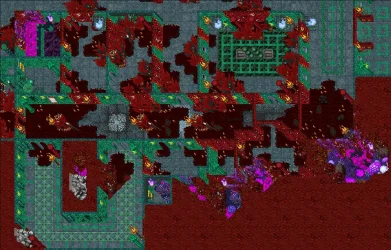
Beneath the flooded caverns of Diyu, beyond the catacombs where Undead Dragons wander and the purple vapors give birth to Ghastly Dragons, lies a forgotten abyss feared even by the High Drakens of Zangatu. Known simply as The Forsaken Depths, this prison was reserved for those whose crimes transcended betrayal. Here were cast not only the greatest traitors of the Saurian Empire, but also the victims of Grayhaven's earliest biological experiments.
Centuries ago, during the first conflicts between Grayhaven and the lizard kingdoms, captured prisoners from Zambe and noble Drakens from Zangatu were secretly delivered to alchemists and warlocks seeking to understand the resilience of draconic blood. Flesh was fused with corrupted mana, emerald dust, unstable alchemical compounds, and fragments of undead tissue recovered from Diyu itself. Few survived. Those who did became something neither living nor dead.
Their scales blackened with necrosis, exposing glowing veins of violet mana beneath cracked flesh. Bones pierced through their bodies as if trying to escape, while the toxic vapors of Diyu slowly replaced their blood. Many lost their eyes, yet continued to perceive the world through currents of magical energy flowing beneath the earth. Others fused with the cavern walls, becoming living masses of stone, bone, and decayed muscle that whisper in forgotten Draken dialects.
The greatest irony is that these creatures are no longer prisoners of Grayhaven or of Zangatu. They are prisoners of G.O.D.'s simulation itself.
The Bonelords of the Trinary Tower believe the Forsaken Depths are places where the equations governing reality begin to fail. The endless suffering, failed resurrections, and fractured identities generate anomalies within the world's mathematical framework. To the Bonelords, these abominations are not monsters—they are corrupted variables, evidence that the simulation cannot perfectly reconcile life, death, and memory.
Among the horrors still wandering these caverns are former generals of the Draken Empire, forgotten revolutionaries from Zambe who dreamed of equality, priests condemned for questioning the Dracomandaments, and nameless civilians whose only crime was surviving Grayhaven's experiments. None remember who they once were. Their minds were erased, just as Diyu decrees, yet fragments of instinct remain. Some still salute invisible emperors. Others endlessly dig through stone searching for homes that no longer exist.
Legends claim that somewhere within the deepest chamber sleeps the first experimental subject ever created by Grayhaven—a lizard whose body, soul, and fragmented consciousness refused to separate after death. Neither Undead Dragon nor Ghastly Dragon, it exists as an impossible being, a contradiction within Diyu's own laws. The Bonelords call it The Constant Error, believing its existence proves that even G.O.D.'s perfect simulation contains flaws that cannot be corrected.
To the lizardfolk, entering the Forsaken Depths is worse than descending into hell. Diyu destroys identity as punishment; the Forsaken Depths preserve broken remnants of it forever. It is a place where justice ended, science lost all restraint, and the boundaries between biology, necromancy, and mathematics dissolved into an eternal nightmare.
OP
OP
Kaorus
Unleash Dreams Staff
- Joined
- May 18, 2008
- Messages
- 1,191
- Solutions
- 1
- Reaction score
- 173
56. Hawkins Shipyard
On the western terraces of Emberwake Harbor, overlooking the U-shaped bay that has protected sailors for centuries, stand the twin towers of Hawkins Shipyard, the greatest center of naval engineering ever built. One tower overlooks the northern docks, while the other commands the southern basin. Between them lies a marvel of dwarven-inspired engineering and Grayhaven innovation: an artificial floating dry dock whose water level is controlled through a sophisticated buoyancy mechanism, allowing entire ships to rise and descend with the tide inside a stone reservoir carved directly into the mountain.
The shipyard is governed by Ronan "The Shipwright" Hawkins, descendant of the Hawkins family that has served Grayhaven since the Empire's earliest expeditions. Although he rarely leaves the docks himself, Ronan is regarded as the greatest naval architect alive. His workshops design vessels capable of enduring every sea on the continent—from the frozen iceberg fields of Iskfjorn to the whirlpools surrounding Scarlume and the shallow coral waters near Tapuyra. His craftsmen constantly experiment with hull geometry, reinforced keels, modular ballast systems, and sail configurations that maximize speed while maintaining remarkable stability.
Officially, Hawkins Shipyard constructs merchant vessels and repairs damaged fleets arriving from every nation. In reality, it is one of the strategic pillars of Grayhaven's military power. Hidden beneath ordinary commercial contracts, entire squadrons of warships are assembled inside secluded dry docks before leaving disguised as civilian cargo fleets. Timber from Grayhaven's ancient forests arrives under heavy guard, while steel, Crimson Crystal alloys, and precision components produced by Kheled Tzur Industries travel through Emberwake Harbor before reaching Hawkins' workshops.
The harbor itself serves as both fortress and marketplace. Its naturally sheltered U-shaped coastline protects ships from the violent western ocean, although powerful crosswinds, tidal surges, and submerged rock formations demand constant vigilance from every captain entering the bay. Warm tropical breezes collide with dry coastal winds, creating unpredictable weather that can transform calm seas into dangerous squalls within hours.
Among the dozens of vessels constantly undergoing maintenance, two have become symbols of the harbor.
The Mercedes no Mercy is Admiral Silas Morgrave's flagship, a captured Ni Zangan Type-015 single-mast warship stolen from Zangatu during one of Grayhaven's covert operations. Extensively modified by Hawkins' engineers, it carries rotating Lockhart cannons capable of engaging targets from multiple directions simultaneously, making it one of the deadliest pirate vessels ever to sail the western seas. Its symmetrical design favors maneuverability and sustained combat rather than cargo capacity.
Moored nearby rests the imposing Queen Eliza, an asymmetric Goldbank-class merchant vessel operated in secret by the Royal Bank of Grayhaven. Official records claim the ship was hijacked years ago by pirates operating from Emberwake. Few believe the story. Within its enormous multi-level cargo decks travel precious metals, food reserves, gemstones, financial reserves, diplomatic correspondence, and carefully disguised shipments of military funding. Through an elaborate network of shell merchants and pirate intermediaries, fortunes are laundered aboard the Queen Eliza before quietly returning to Grayhaven's treasury, allowing the Crown to finance military expansion while maintaining lower domestic taxation and interest rates.
Because of the continent's geography, Hawkins Shipyard occupies one of the world's most valuable strategic positions. Dangerous ice fields block reliable northern navigation around Iskfjorn, while reefs, tidal vortices, and pirate-controlled waters complicate passage along Tapuyra's western coast. Nearly every major commercial route eventually converges on Emberwake Harbor, making Hawkins Shipyard indispensable not only for repairs but also for logistical planning, exploration, emergency resupply, and naval innovation.
Whether serving emperors, merchants, explorers, or pirates, every ship that leaves Hawkins Shipyard carries the same reputation: if it was built beneath the twin towers, it was built to survive.
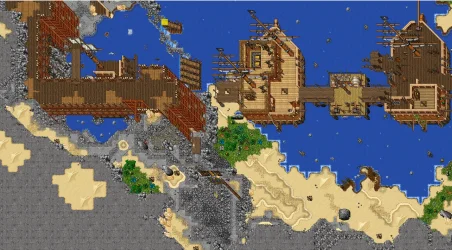
On the western terraces of Emberwake Harbor, overlooking the U-shaped bay that has protected sailors for centuries, stand the twin towers of Hawkins Shipyard, the greatest center of naval engineering ever built. One tower overlooks the northern docks, while the other commands the southern basin. Between them lies a marvel of dwarven-inspired engineering and Grayhaven innovation: an artificial floating dry dock whose water level is controlled through a sophisticated buoyancy mechanism, allowing entire ships to rise and descend with the tide inside a stone reservoir carved directly into the mountain.
The shipyard is governed by Ronan "The Shipwright" Hawkins, descendant of the Hawkins family that has served Grayhaven since the Empire's earliest expeditions. Although he rarely leaves the docks himself, Ronan is regarded as the greatest naval architect alive. His workshops design vessels capable of enduring every sea on the continent—from the frozen iceberg fields of Iskfjorn to the whirlpools surrounding Scarlume and the shallow coral waters near Tapuyra. His craftsmen constantly experiment with hull geometry, reinforced keels, modular ballast systems, and sail configurations that maximize speed while maintaining remarkable stability.
Officially, Hawkins Shipyard constructs merchant vessels and repairs damaged fleets arriving from every nation. In reality, it is one of the strategic pillars of Grayhaven's military power. Hidden beneath ordinary commercial contracts, entire squadrons of warships are assembled inside secluded dry docks before leaving disguised as civilian cargo fleets. Timber from Grayhaven's ancient forests arrives under heavy guard, while steel, Crimson Crystal alloys, and precision components produced by Kheled Tzur Industries travel through Emberwake Harbor before reaching Hawkins' workshops.
The harbor itself serves as both fortress and marketplace. Its naturally sheltered U-shaped coastline protects ships from the violent western ocean, although powerful crosswinds, tidal surges, and submerged rock formations demand constant vigilance from every captain entering the bay. Warm tropical breezes collide with dry coastal winds, creating unpredictable weather that can transform calm seas into dangerous squalls within hours.
Among the dozens of vessels constantly undergoing maintenance, two have become symbols of the harbor.
The Mercedes no Mercy is Admiral Silas Morgrave's flagship, a captured Ni Zangan Type-015 single-mast warship stolen from Zangatu during one of Grayhaven's covert operations. Extensively modified by Hawkins' engineers, it carries rotating Lockhart cannons capable of engaging targets from multiple directions simultaneously, making it one of the deadliest pirate vessels ever to sail the western seas. Its symmetrical design favors maneuverability and sustained combat rather than cargo capacity.
Moored nearby rests the imposing Queen Eliza, an asymmetric Goldbank-class merchant vessel operated in secret by the Royal Bank of Grayhaven. Official records claim the ship was hijacked years ago by pirates operating from Emberwake. Few believe the story. Within its enormous multi-level cargo decks travel precious metals, food reserves, gemstones, financial reserves, diplomatic correspondence, and carefully disguised shipments of military funding. Through an elaborate network of shell merchants and pirate intermediaries, fortunes are laundered aboard the Queen Eliza before quietly returning to Grayhaven's treasury, allowing the Crown to finance military expansion while maintaining lower domestic taxation and interest rates.
Because of the continent's geography, Hawkins Shipyard occupies one of the world's most valuable strategic positions. Dangerous ice fields block reliable northern navigation around Iskfjorn, while reefs, tidal vortices, and pirate-controlled waters complicate passage along Tapuyra's western coast. Nearly every major commercial route eventually converges on Emberwake Harbor, making Hawkins Shipyard indispensable not only for repairs but also for logistical planning, exploration, emergency resupply, and naval innovation.
Whether serving emperors, merchants, explorers, or pirates, every ship that leaves Hawkins Shipyard carries the same reputation: if it was built beneath the twin towers, it was built to survive.
OP
OP
Kaorus
Unleash Dreams Staff
- Joined
- May 18, 2008
- Messages
- 1,191
- Solutions
- 1
- Reaction score
- 173
57. Spirits of Scarlume
Life on Scarlume, known to Grayhaven as Emberwake Isle, has always revolved around the sea. While its harbors bustle with merchants, smugglers, and privateers, the island's steep hills conceal another industry nearly as profitable as piracy itself: its mountain distilleries.
Built high above the cliffs where dry ocean winds temper the tropical humidity, dozens of family-run breweries and distilleries produce renowned sugarcane rums, banana liqueurs, and aged spirits unlike any found elsewhere on the continent. Their success comes from an unusual partnership. Pirate families preserve centuries-old fermentation techniques learned during long voyages across distant seas, while engineers and metallurgists from Grayhaven and Har Kadesh have introduced precision distillation equipment, copper stills, pressure-controlled aging chambers, and mineral filtration systems. The result is a collection of spirits sought after by nobles, merchants, diplomats, and criminal syndicates alike.
Many negotiations throughout the continent begin with a bottle from Scarlume. A rare vintage often carries more influence than a chest of gold, and it is customary for captains to seal alliances by sharing a drink overlooking Emberwake Harbor.
Yet the island's reputation carries a darker side.
Rumors persist that certain distilleries quietly produce exceptionally potent liquors under contracts linked to Grayhaven's intelligence network. These shipments frequently find their way into frontier taverns across Tapuyra, where excessive drinking has fueled disputes between humans, lizardfolk, and apes. While no government has proven deliberate sabotage, many Tapuyran officials suspect that alcohol has become another weapon in Grayhaven's long campaign to weaken the republic from within—not through armies, but through fractured communities and eroded trust.
For the pirates of Scarlume, however, alcohol is more than commerce or politics. Months at sea beneath relentless storms, endless horizons, and constant uncertainty weigh heavily on even the strongest sailors. Rum has become both celebration and refuge, helping crews endure isolation, mourn fallen comrades, and forget the violence that sustains their way of life.
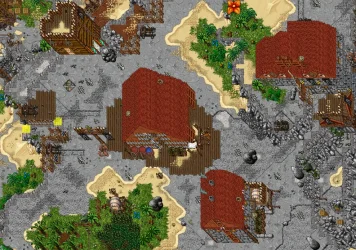
Life on Scarlume, known to Grayhaven as Emberwake Isle, has always revolved around the sea. While its harbors bustle with merchants, smugglers, and privateers, the island's steep hills conceal another industry nearly as profitable as piracy itself: its mountain distilleries.
Built high above the cliffs where dry ocean winds temper the tropical humidity, dozens of family-run breweries and distilleries produce renowned sugarcane rums, banana liqueurs, and aged spirits unlike any found elsewhere on the continent. Their success comes from an unusual partnership. Pirate families preserve centuries-old fermentation techniques learned during long voyages across distant seas, while engineers and metallurgists from Grayhaven and Har Kadesh have introduced precision distillation equipment, copper stills, pressure-controlled aging chambers, and mineral filtration systems. The result is a collection of spirits sought after by nobles, merchants, diplomats, and criminal syndicates alike.
Many negotiations throughout the continent begin with a bottle from Scarlume. A rare vintage often carries more influence than a chest of gold, and it is customary for captains to seal alliances by sharing a drink overlooking Emberwake Harbor.
Yet the island's reputation carries a darker side.
Rumors persist that certain distilleries quietly produce exceptionally potent liquors under contracts linked to Grayhaven's intelligence network. These shipments frequently find their way into frontier taverns across Tapuyra, where excessive drinking has fueled disputes between humans, lizardfolk, and apes. While no government has proven deliberate sabotage, many Tapuyran officials suspect that alcohol has become another weapon in Grayhaven's long campaign to weaken the republic from within—not through armies, but through fractured communities and eroded trust.
For the pirates of Scarlume, however, alcohol is more than commerce or politics. Months at sea beneath relentless storms, endless horizons, and constant uncertainty weigh heavily on even the strongest sailors. Rum has become both celebration and refuge, helping crews endure isolation, mourn fallen comrades, and forget the violence that sustains their way of life.
OP
OP
Kaorus
Unleash Dreams Staff
- Joined
- May 18, 2008
- Messages
- 1,191
- Solutions
- 1
- Reaction score
- 173
58. Green Dolphin Street Prison
Hidden among the cliffs of Scarlume, overlooking the western sea, stands the infamous Green Dolphin Street Prison, the island's maximum-security fortress. Originally built to imprison mutinous corsairs, it gradually evolved into one of the Grayhaven Intelligence Bureau's most valuable black sites, where pirates, spies, political dissidents, and captured revolutionaries disappear without trial.
Its isolation makes escape nearly impossible. Towering cliffs, treacherous tides, and the sea vortices surrounding Emberwake have claimed far more lives than the prison's executioners ever did. Those who somehow escape their cells rarely survive the waters below.
Officially, the prison is administered by the pirate authorities of Scarlume. In reality, its deepest chambers are reserved for Bureau interrogators, who extract military secrets, trade routes, and political intelligence from prisoners through psychological manipulation as much as physical torture. Supporters of Tapuyra's independence, captured smugglers, rebellious Grayhaven officers, and foreign agents have all passed through its iron gates.
Perhaps its cruelest feature is the Treasure Vault. Adjacent to several isolation cells lies a heavily guarded chamber overflowing with gold, gemstones, and relics seized from pirate raids. Prisoners can see the fortune through reinforced iron bars, close enough to touch with their eyes, yet forever beyond their reach. For corsairs who devoted their lives to plundering merchant fleets, the sight becomes a punishment of its own. Many spend their final years watching unimaginable wealth while dying in chains, driven to madness by the ultimate irony: they stole fortunes across the world, only to perish beside one they could never claim.
Among sailors, a saying has become common throughout the western seas:
"The rum of Scarlume steals your reason. Green Dolphin steals everything else."
Green Dolphin Street Prison stands as one of the many pillars supporting Scarlume's influence. From bustling ports and towering cranes to hidden workshops, pirate enclaves, and mountain distilleries, every corner of the island serves a purpose in the delicate balance of trade, espionage, and private warfare. Yet much of Scarlume remains unmapped, its remote coves and ancient strongholds still hiding stories waiting to be uncovered.
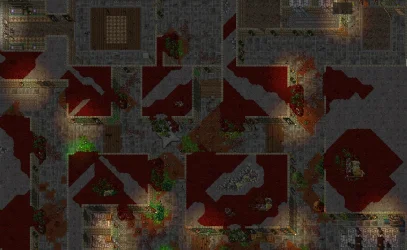
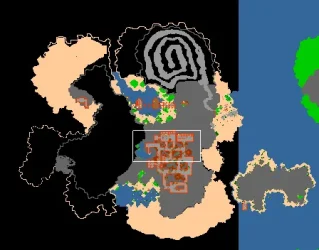
Hidden among the cliffs of Scarlume, overlooking the western sea, stands the infamous Green Dolphin Street Prison, the island's maximum-security fortress. Originally built to imprison mutinous corsairs, it gradually evolved into one of the Grayhaven Intelligence Bureau's most valuable black sites, where pirates, spies, political dissidents, and captured revolutionaries disappear without trial.
Its isolation makes escape nearly impossible. Towering cliffs, treacherous tides, and the sea vortices surrounding Emberwake have claimed far more lives than the prison's executioners ever did. Those who somehow escape their cells rarely survive the waters below.
Officially, the prison is administered by the pirate authorities of Scarlume. In reality, its deepest chambers are reserved for Bureau interrogators, who extract military secrets, trade routes, and political intelligence from prisoners through psychological manipulation as much as physical torture. Supporters of Tapuyra's independence, captured smugglers, rebellious Grayhaven officers, and foreign agents have all passed through its iron gates.
Perhaps its cruelest feature is the Treasure Vault. Adjacent to several isolation cells lies a heavily guarded chamber overflowing with gold, gemstones, and relics seized from pirate raids. Prisoners can see the fortune through reinforced iron bars, close enough to touch with their eyes, yet forever beyond their reach. For corsairs who devoted their lives to plundering merchant fleets, the sight becomes a punishment of its own. Many spend their final years watching unimaginable wealth while dying in chains, driven to madness by the ultimate irony: they stole fortunes across the world, only to perish beside one they could never claim.
Among sailors, a saying has become common throughout the western seas:
"The rum of Scarlume steals your reason. Green Dolphin steals everything else."
Green Dolphin Street Prison stands as one of the many pillars supporting Scarlume's influence. From bustling ports and towering cranes to hidden workshops, pirate enclaves, and mountain distilleries, every corner of the island serves a purpose in the delicate balance of trade, espionage, and private warfare. Yet much of Scarlume remains unmapped, its remote coves and ancient strongholds still hiding stories waiting to be uncovered.
OP
OP
Kaorus
Unleash Dreams Staff
- Joined
- May 18, 2008
- Messages
- 1,191
- Solutions
- 1
- Reaction score
- 173
59. The Twin Sisters
Estreito das Gêmeas (Tapuyra) • Twinwake Strait (Grayhaven)
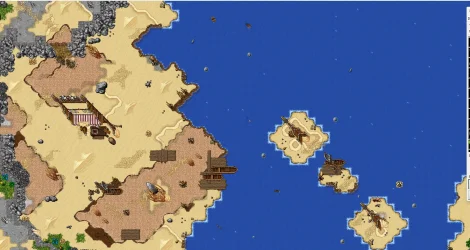
Separating the main island of Scarlume from its smaller northern island lies a narrow maritime passage known by two official names. To the Republic of Tapuyra, it is the Estreito das Gêmeas (Strait of the Twins), named after the two nearly identical islets that stand at its center. Grayhaven charts record the same waters as Twinwake Strait, emphasizing its importance as a navigational gateway leading into Emberwake Harbor.
The two rocky islets are known in Tapuyra as Ilha Irmã Maior (Greater Sister) and Ilha Irmã Menor (Lesser Sister), while Grayhaven sailors simply call them North Sister and South Sister. Though small, both islands serve as indispensable landmarks for captains approaching Scarlume.
Unlike the towering cliffs of Emberwake Harbor, the Sisters are low tropical outcrops shaped by wind, salt, and relentless tides. Sparse palm trees cling to the sandy ground, while dry grasses and volcanic rock dominate the landscape. Their calm coves contrast sharply with the dangerous currents surrounding the strait, making them natural refuges for vessels waiting for favorable tides or clearance to enter the harbor.
Over time, a pair of humble maritime outposts emerged on the islands. Each consists of a weathered wooden dock, a handful of moored rowboats, and a small supply shop sheltered beneath the iconic red-and-white striped canvas awnings that have become symbols of the passage. Sailors stop to purchase fresh water, preserved food, rope, lamp oil, maps, and replacement tools before continuing toward Emberwake Harbor or the western seas.
Although the shops appear modest, they operate day and night, serving everyone willing to pay—from Grayhaven merchants and Tapuyran fishermen to smugglers, mercenaries, explorers, and pirates. Local custom dictates that no violence is permitted within sight of the awnings. Breaking this unwritten rule is said to invite the wrath of Pirate Harris III himself, whose influence extends even to these isolated rocks.
Hidden beneath the simplicity of the islands lies their true purpose. Their elevated watch posts silently monitor every vessel crossing the strait, recording cargo movements, identifying unfamiliar flags, and relaying information to Emberwake Harbor through signal lanterns during the night and colored smoke by day. Few ships realize that the moment they pass between the Sisters, their arrival has already been reported.
For travelers, the Twin Sisters are a welcome place to rest.
For Scarlume, they are the first checkpoint of an island that sees everything entering—and everything leaving—the western sea.
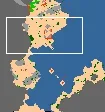
Estreito das Gêmeas (Tapuyra) • Twinwake Strait (Grayhaven)
Separating the main island of Scarlume from its smaller northern island lies a narrow maritime passage known by two official names. To the Republic of Tapuyra, it is the Estreito das Gêmeas (Strait of the Twins), named after the two nearly identical islets that stand at its center. Grayhaven charts record the same waters as Twinwake Strait, emphasizing its importance as a navigational gateway leading into Emberwake Harbor.
The two rocky islets are known in Tapuyra as Ilha Irmã Maior (Greater Sister) and Ilha Irmã Menor (Lesser Sister), while Grayhaven sailors simply call them North Sister and South Sister. Though small, both islands serve as indispensable landmarks for captains approaching Scarlume.
Unlike the towering cliffs of Emberwake Harbor, the Sisters are low tropical outcrops shaped by wind, salt, and relentless tides. Sparse palm trees cling to the sandy ground, while dry grasses and volcanic rock dominate the landscape. Their calm coves contrast sharply with the dangerous currents surrounding the strait, making them natural refuges for vessels waiting for favorable tides or clearance to enter the harbor.
Over time, a pair of humble maritime outposts emerged on the islands. Each consists of a weathered wooden dock, a handful of moored rowboats, and a small supply shop sheltered beneath the iconic red-and-white striped canvas awnings that have become symbols of the passage. Sailors stop to purchase fresh water, preserved food, rope, lamp oil, maps, and replacement tools before continuing toward Emberwake Harbor or the western seas.
Although the shops appear modest, they operate day and night, serving everyone willing to pay—from Grayhaven merchants and Tapuyran fishermen to smugglers, mercenaries, explorers, and pirates. Local custom dictates that no violence is permitted within sight of the awnings. Breaking this unwritten rule is said to invite the wrath of Pirate Harris III himself, whose influence extends even to these isolated rocks.
Hidden beneath the simplicity of the islands lies their true purpose. Their elevated watch posts silently monitor every vessel crossing the strait, recording cargo movements, identifying unfamiliar flags, and relaying information to Emberwake Harbor through signal lanterns during the night and colored smoke by day. Few ships realize that the moment they pass between the Sisters, their arrival has already been reported.
For travelers, the Twin Sisters are a welcome place to rest.
For Scarlume, they are the first checkpoint of an island that sees everything entering—and everything leaving—the western sea.
OP
OP
Kaorus
Unleash Dreams Staff
- Joined
- May 18, 2008
- Messages
- 1,191
- Solutions
- 1
- Reaction score
- 173
60. Bloody Sands
Known in Grayhaven military records as the Bloodlands
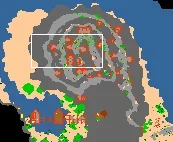
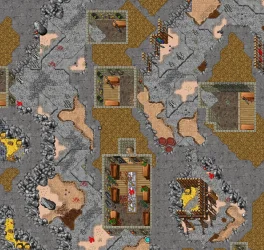
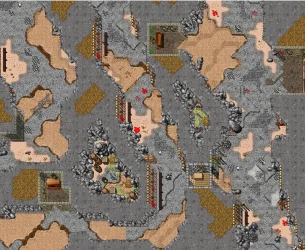
At the northeastern edge of Scarlume, where the cliffs descend into windswept beaches and shallow sea caves, lies one of the island's most feared places: Bloody Sands, known to Grayhaven as the Bloodlands. What appears from afar to be a quiet stretch of pink-tinted sand hides centuries of violence, betrayal, and calculated cruelty.
The unusual color of the beaches is not entirely natural. Generations of executions, torture, and shallow burials have stained the pale sands, giving rise to the belief that the land itself remembers every life taken upon it. Pirates claim the tides can never fully wash away the blood spilled there.
Bloody Sands serves as Scarlume's unofficial court of last resort. Debtors who fail to repay powerful merchants, pirates who betray their captains, spies who sell information to the wrong buyer, and nobles who disappear from public records are often delivered here under heavy guard. Professional interrogators—many rumored to have been trained or funded by the Grayhaven Intelligence Bureau—extract confessions, hidden fortunes, banking codes, and political secrets through relentless psychological and physical torment. Few prisoners ever leave alive.
The fate of the dead depends entirely on their worth. Wealthy merchants, influential captains, and respected corsairs may receive elaborate stone mausoleums overlooking the sea, where their families quietly mourn in secret. Most victims, however, are stripped of their possessions and cast into anonymous pits, buried beneath the crimson sand without names or markers, forgotten by everyone except the island itself.
Scattered across the dunes remain rusted cages, broken wheels, execution stakes, iron restraints, and weathered torture devices abandoned over generations. At night, restless spirits drift between the caves, while skeletal pirates and cursed corsairs wander the shoreline, endlessly searching for treasures they died protecting—or for revenge against those who betrayed them.
The Bloodlands also conceal another purpose known only to a handful of officials. Isolated from major settlements, the beaches have long served as Grayhaven's clandestine proving grounds for experimental military weapons. Engineers, soldiers, and officers periodically arrive to test new longbows, heavy crossbows, siege bolts, and armor-piercing ammunition against condemned prisoners or abandoned targets placed along the cliffs. Officially, these exercises never occurred.
To the people of Scarlume, Bloody Sands is more than a graveyard. It is a warning. Every debt carries a price, every betrayal leaves a mark, and on this island, gold can buy almost anything—except forgiveness.
Known in Grayhaven military records as the Bloodlands
At the northeastern edge of Scarlume, where the cliffs descend into windswept beaches and shallow sea caves, lies one of the island's most feared places: Bloody Sands, known to Grayhaven as the Bloodlands. What appears from afar to be a quiet stretch of pink-tinted sand hides centuries of violence, betrayal, and calculated cruelty.
The unusual color of the beaches is not entirely natural. Generations of executions, torture, and shallow burials have stained the pale sands, giving rise to the belief that the land itself remembers every life taken upon it. Pirates claim the tides can never fully wash away the blood spilled there.
Bloody Sands serves as Scarlume's unofficial court of last resort. Debtors who fail to repay powerful merchants, pirates who betray their captains, spies who sell information to the wrong buyer, and nobles who disappear from public records are often delivered here under heavy guard. Professional interrogators—many rumored to have been trained or funded by the Grayhaven Intelligence Bureau—extract confessions, hidden fortunes, banking codes, and political secrets through relentless psychological and physical torment. Few prisoners ever leave alive.
The fate of the dead depends entirely on their worth. Wealthy merchants, influential captains, and respected corsairs may receive elaborate stone mausoleums overlooking the sea, where their families quietly mourn in secret. Most victims, however, are stripped of their possessions and cast into anonymous pits, buried beneath the crimson sand without names or markers, forgotten by everyone except the island itself.
Scattered across the dunes remain rusted cages, broken wheels, execution stakes, iron restraints, and weathered torture devices abandoned over generations. At night, restless spirits drift between the caves, while skeletal pirates and cursed corsairs wander the shoreline, endlessly searching for treasures they died protecting—or for revenge against those who betrayed them.
The Bloodlands also conceal another purpose known only to a handful of officials. Isolated from major settlements, the beaches have long served as Grayhaven's clandestine proving grounds for experimental military weapons. Engineers, soldiers, and officers periodically arrive to test new longbows, heavy crossbows, siege bolts, and armor-piercing ammunition against condemned prisoners or abandoned targets placed along the cliffs. Officially, these exercises never occurred.
To the people of Scarlume, Bloody Sands is more than a graveyard. It is a warning. Every debt carries a price, every betrayal leaves a mark, and on this island, gold can buy almost anything—except forgiveness.
OP
OP
Kaorus
Unleash Dreams Staff
- Joined
- May 18, 2008
- Messages
- 1,191
- Solutions
- 1
- Reaction score
- 173
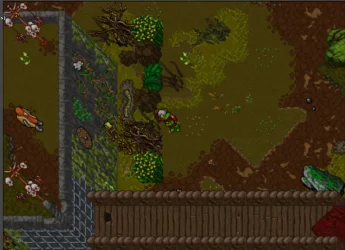
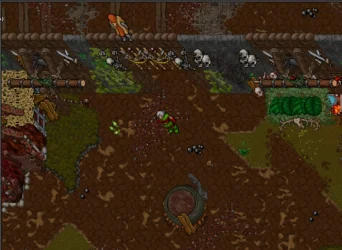
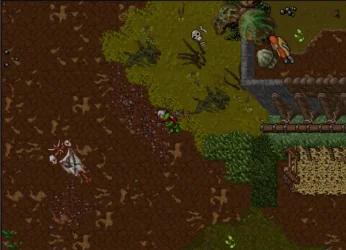
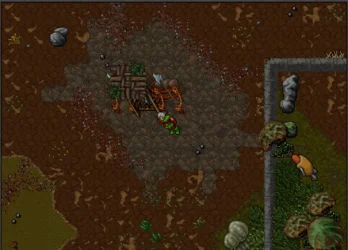
61. Beneath the imposing fortress of Mornkul Woods stretches a vast network of flooded caverns and marshes known collectively as the Deep Marshes, where stagnant waters, dense reeds, and heavy clay have concealed the true heart of ogre civilization for centuries. While the orcs defend the fortress above, the deepest reaches belong to the ogres, whose immense strength is matched only by their discipline and intelligence. Hidden from the outside world, they have built colossal timber halls upon ancient piles driven into the marsh, linked by elevated walkways that rise above the black water. Here the strongest ogres live, train, and command their warriors, preserving a strict hierarchy in which every rank is earned through combat, leadership, and endurance rather than bloodline. The swamp itself serves as their greatest instructor, forcing young warriors to master combat in deep mud, waist-high water, and dense fog before they are recognized as true defenders of Mornkul. Throughout their halls hang grim trophies collected over generations—broken weapons, banners, armor, and the skulls of fallen enemies taken from Grayhaven expeditions, Tapuyran mercenaries, rival orc clans, and countless adventurers who underestimated the marsh. To the ogres, these relics are not decorations but records of honor, each telling the story of a worthy opponent defeated in battle. Few outsiders realize that the seemingly chaotic tribes above are supported by an organized military culture hidden below, where strategy, engineering, and martial tradition have flourished in secrecy. Travelers who wander too deep into the flooded caverns rarely return, for the ogres of the Deep Marshes do not welcome intruders—they study them, hunt them, and, if deemed worthy, immortalize them among the trophies of Mornkul Woods, where every skull is a lesson and every victory strengthens the legacy of the ancient heroes who once forged the destiny of the forest.